









Celebrating Motherhood

EtonHouse Singapore
Celebrating Motherhood
The Mother’s Day tradition, contrary to popular belief, is not a recent phenomenon. It started as a festival by the ancient Greeks and Romans in honour of their mother goddesses and was thereafter revived in the UK and the US. Some people may opine that this celebration has taken on commercial dimensions. Why do we have to celebrate a day in the year to thank our mothers? Shouldn’t we be doing so every day? We can’t agree more. Mothers are indeed special! For us as educators, mothers are our greatest ally, the child’s first teacher, the protagonist of all learning stories that we weave together in our quest for knowledge, skills and competence for young children. We will not let go of any opportunity to celebrate mothers and their contribution to children and their learning.
Here are some mum heroes, whose contributions we would like to acknowledge.
Mrs. Ng Gim Choo, Founder of EtonHouse
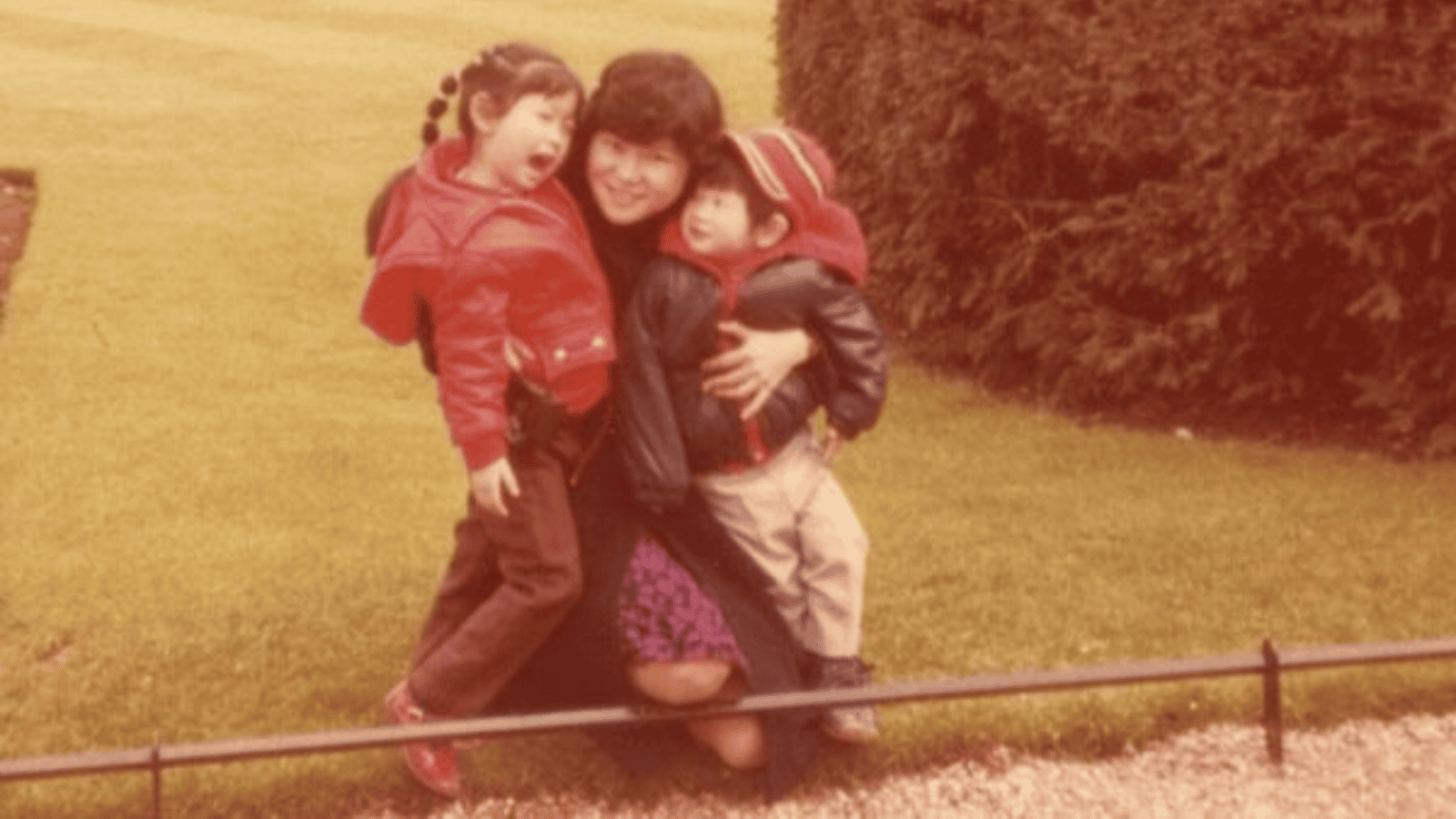
Had it not been for this super mum and her desire to make a difference to the lives of children, there wouldn’t have been an EtonHouse today. Mother of three, E-Ching, Yi-Sheng and Yi-Xian, Mrs. Ng Gim Choo followed her husband to England after quitting her highly successful career as an accountant in Singapore. What followed were many years of dedication to the education and care of her children and a revelation in England that led to the birth of EtonHouse. As a mother, Mrs. Ng was disappointed in some of the very archaic and dogmatic rules that seemed to govern early years centres in the 80s. Some of the very popular and highly ‘successful’ schools ‘scolded’ children for bringing creativity into their work.
Mrs. Ng added “When my daughter was in kindergarten at the age of 2 ½, she was asked to colour a flower red. She liked purple as she loved the morning glory flower and coloured her flower purple. She was admonished by the teacher. She was also asked to write difficult Chinese character “dou4” (bean). She refused to write it. Again, she was scolded by her teacher. So she refused to go to school. I kept her at home for about two weeks, hoping she would change her mind. On the third week, she still refused to go to school. So I went to school to talk to the principal. I told her my daughter didn’t want to go to school, and perhaps it was too difficult for her at that age to do these tasks. The principal scolded me. She said, “All the children could follow instructions. I don’t understand why your daughter can’t. As a mother, you are supposed to encourage her to comply with school rules, but you have kept her at home.” I told her, “If that is the case, perhaps I should withdraw her from school. May I have the deposit refunded?” The principal said, “No, you will not get your deposit.” So I said I would respect the school rules. So E-Ching never went to pre-school. She played at home until we went to the UK”.
We know now that flowers can take on every possible hue on this planet. Genetic engineering and a little imagination is all it takes!
The school in England that Mrs. Ng’s daughter attended was different. It “listened” to children. No answer was “wrong” or “silly”. E-Ching thrived in this school and was very soon teaching her mother the grammar and syntax of a language which she did not know at all till she moved to her new school. “Mummy, don’t swallow your end consonants! Pronounce your S’s, your T’s and your K’s, and take a deep breath as if you are breathing from your toes.”
Self-confidence and a strong self-concept was the key to her remarkable learning journey. And it was all possible with a little respect for children and their thinking.
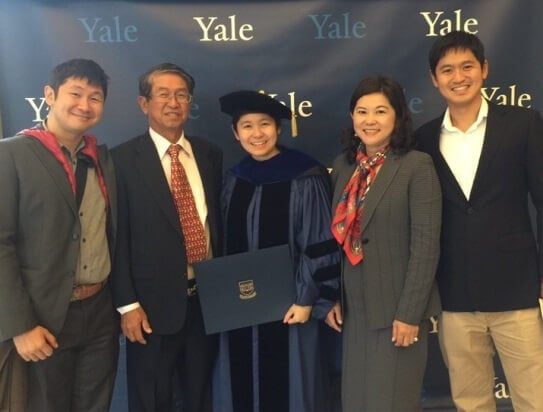
Today, E-Ching has a PhD from Yale University. Her other children are successful and responsible adults, excelling in their chosen profession. And while they were growing up, Mrs. Ng also founded EtonHouse, a brand name that is now in 12 countries and one that has established its commitment to best practice in education.
We asked Mrs. Ng about her childhood. She also shared her most precious memories as a mother and some advice for future mothers and young mothers today.
About her childhood
My parents had six children, three boys and three girls. I am the fourth child in the family. My father ran a family business together with my uncles. My grandmother started the business with my grandfather. She was a very strong and inspiring person and had a great influence on me.
My childhood was happy, fun and memorable. I had many cousins around my age. We grew up together. We played together. Sometimes we quarrelled. After that we remained good friends. There was a lot of space around the factory where we could run, kick balls, and play hide and seek, five stones or many stones. The winner would be the one who picked up the most stones. We wandered everywhere. Sometimes my grandmother would ask us to grow vegetables to grow long beans. We also grew sweet potato leaves. We dug the ground to plant vegetables. I always enjoyed playing with the earthworms, holding them and watching them wriggle.
As a little girl my grandmother took me to see the Hokkien Opera performance in the village. I liked the beautiful opera costumes, especially the princess costumes. They were sewn with embroidery and sequins, with nice headdresses. So at the age of 8, I wished to be an opera actress.
I went to a Chinese School at the age of five: Sin Ming Public School. It was a private school set up by villagers. When my older cousins went to school, I had no one to play with me at home. I cried and told my grandmother I wanted to go to school just like my cousins. My grandma said I was too young to go to school. As I cried each morning when I saw my cousins going to school, my grandma who loved me so much decided to take me to school to meet the principal. She told the principal that though I was under age, I was a clever child. She told the principal to allow me to study in primary one at the age of five.
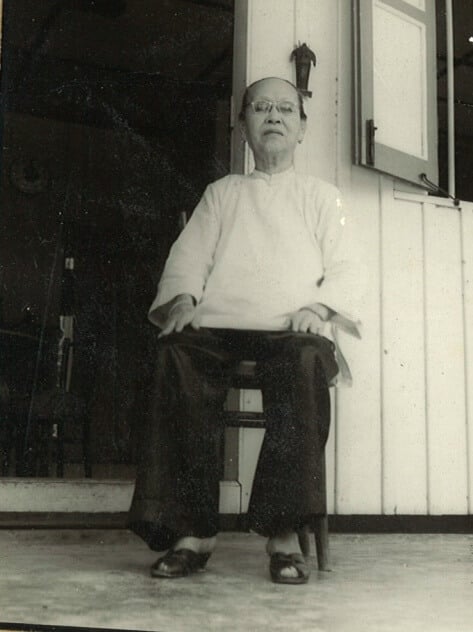
She also promised the principal that if I was unable to catch up with lessons, she would voluntarily take me out of the school. So I went to school each morning with my cousins, and I did very well. I never had to leave school. There was one year I broke my leg after jumping over a “longkang”, after being challenged by my cousin. I was absent from school for a month. In spite of that, that year I was first in my class! I was also elected as a model student. My grandma was so proud of me.
About her children
All my three children enjoy reading. When they were very young, I read stories to them. Books were perceived as toys, and storytelling was a precious time that they waited patiently for before they went to bed.
When I was working as an auditor, I used to come home quite late. My children were in their pyjamas lying in bed and waiting for mummy to read to them their favourite books. I usually read them a Chinese story and an English one.
As E-Ching was studying in an international school during her formative years, she was not exposed to Mandarin during her primary education. As such, I got a calligraphy teacher to teach her Chinese calligraphy. Through calligraphy she enjoyed the brush strokes and eventually got very interested in Chinese history. She even won competitions. I believe this was one reason why she was able to get into Yale, because Yale wanted a diversity of talents.
I also learned calligraphy with E-Ching. Whenever E-Ching is home for holidays, we always find time to do calligraphy together.
I gave up my job at the peak of my career to be a housewife. That was a decision I always feel very proud of, because I made it for my children. My colleagues would make jokes about me after I resigned to accompany my husband to the UK. They said I was going to the UK to take up a housekeeping course. But I think that was the best gift that I gave my children. I fetched them from school, took them to the supermarket, and was a parent volunteer in school. I took interest in what they were doing. For example, when E-Ching was in kindergarten, she had to repeat one year of K1, I supported that decision because I thought she needed that extra year to build her confidence.
My son told me he learned a lot from his sister E-Ching about poetry, and I suppose my youngest son was also influenced by the two of them. I believe that once they learned to enjoy books, they were never lonely.
I think time is the most important gift you can give to your children. No matter how busy you are, you must find time to bond with your children and give them your undivided attention when you are with them. Reading every night is a great way to connect with your child and encourage a love for reading too. Support children in pursuing their interests even if it isn’t academic. Let them fulfil their own dreams, not yours.